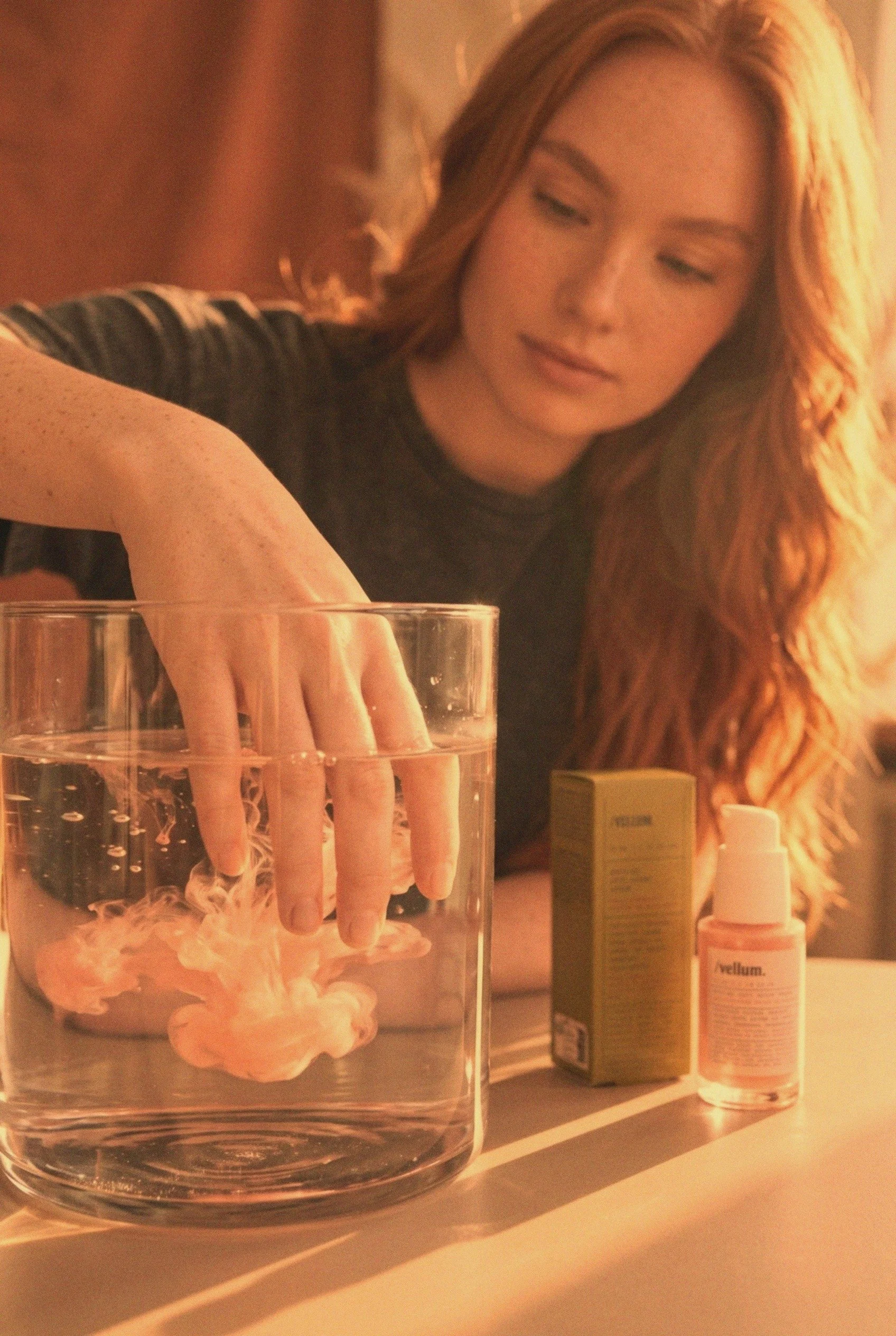
Some skincare ingredients get attention for what they change. Others deserve recognition for what they help maintain: soft, comfortable, well-hydrated skin.
Sodium PCA belongs in that second category. This humectant attracts and holds water, helping the skin’s outermost layer stay hydrated. Its name may sound technical, but its role connects to something familiar: the way skin naturally maintains moisture.
What Is Sodium PCA?
Sodium PCA is the sodium salt of pyrrolidone carboxylic acid, commonly shortened to PCA. PCA occurs naturally in skin and forms part of its natural moisturizing factor, or NMF—a collection of water-binding substances found in the outermost layer of skin.
Think of NMF as part of your skin’s built-in hydration system. It includes substances such as amino acids, lactate, urea, and PCA that help keep water within surface skin cells. Sodium PCA brings that same kind of water-binding function to skincare formulas.*
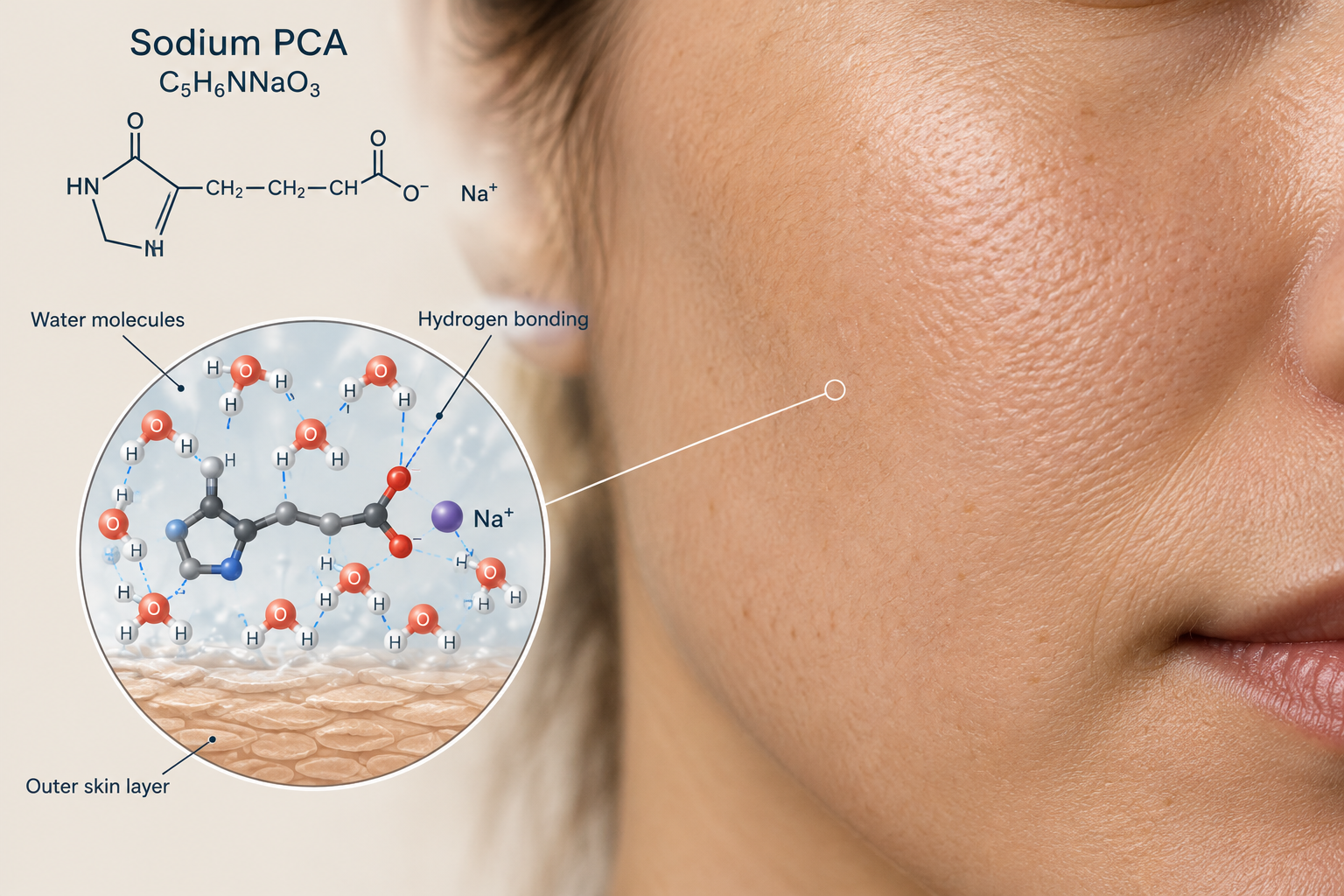
An educational skincare illustration pairs a close-up of a model’s naturally textured cheek with a magnified molecular diagram of sodium PCA. Labeled water molecules and dashed lines illustrate water-binding interactions within the outer skin layer. Soft peach tones and a clean layout connect the molecular detail with realistic skin.
What Does Sodium PCA Do for Skin?
Helps attract and hold moisture
Sodium PCA’s main job is hydration. As a humectant, it binds water within the stratum corneum—the outermost layer of skin—helping maintain a hydrated, comfortable feel. You may find it in serums, gels, creams, and lotions.*
Supports softer, more comfortable skin
Hydration is about more than a dewy finish. By helping the skin’s surface hold moisture, sodium PCA can contribute to a softer, more supple feel. Its role is moisture support rather than exfoliation or resurfacing.*
Complements a well-rounded moisturizer
Sodium PCA does not need to do every moisturizing job on its own. It works well in formulas that also contain emollients, which help soften skin, and occlusive ingredients, which help reduce moisture loss. These ingredients serve different roles: attracting water and helping retain it are complementary parts of moisturizing.
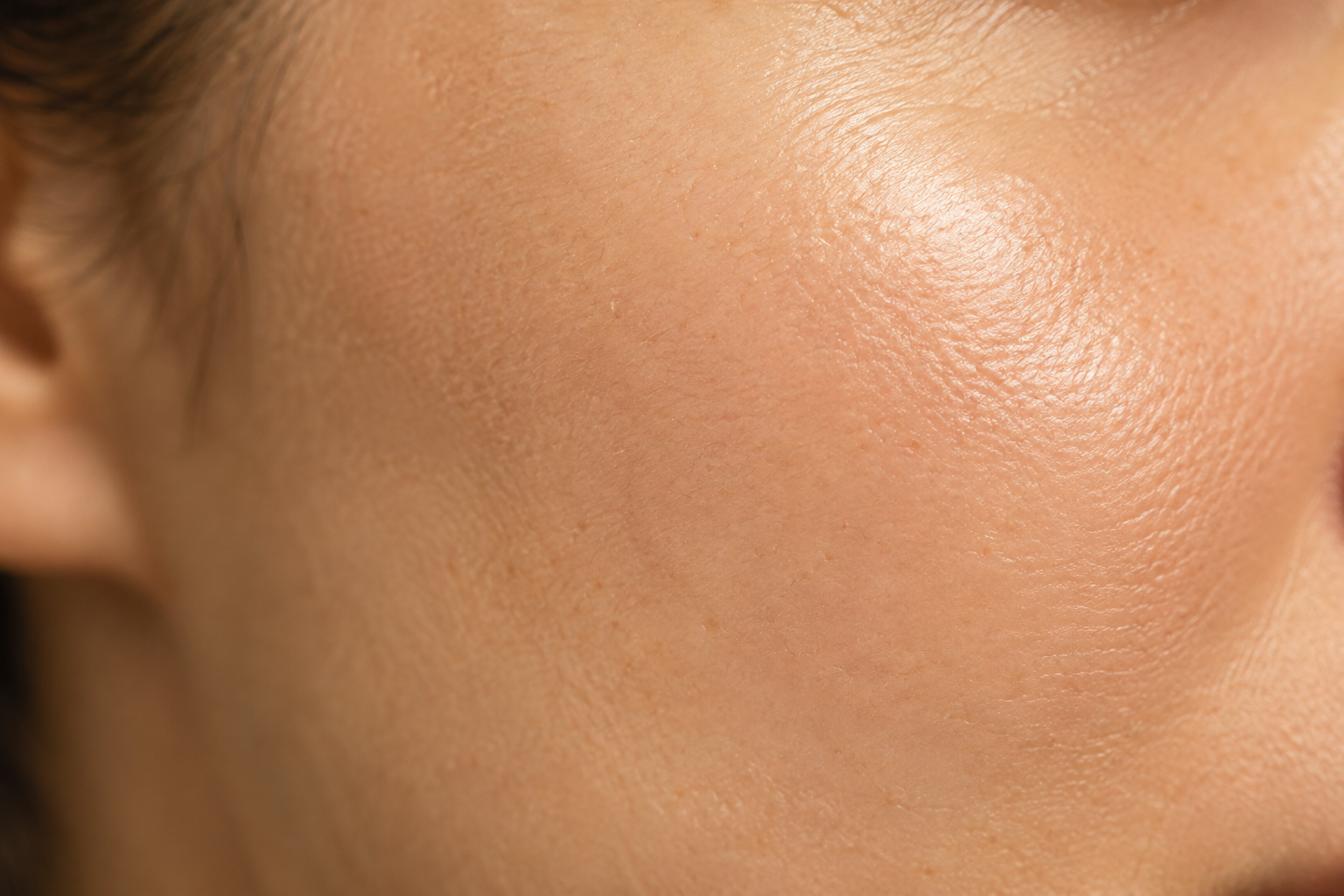
A closer look at hydration—supple skin, a soft glow, and natural texture.
Is Sodium PCA an Exfoliating Acid?
No. Although its full chemical name includes the word “acid,” sodium PCA functions in skincare primarily as a humectant—not as an exfoliant. The name describes its chemistry, not a peeling or resurfacing effect.*
That distinction matters when reading ingredient lists. An ingredient’s name alone does not tell you what it does in a formula.
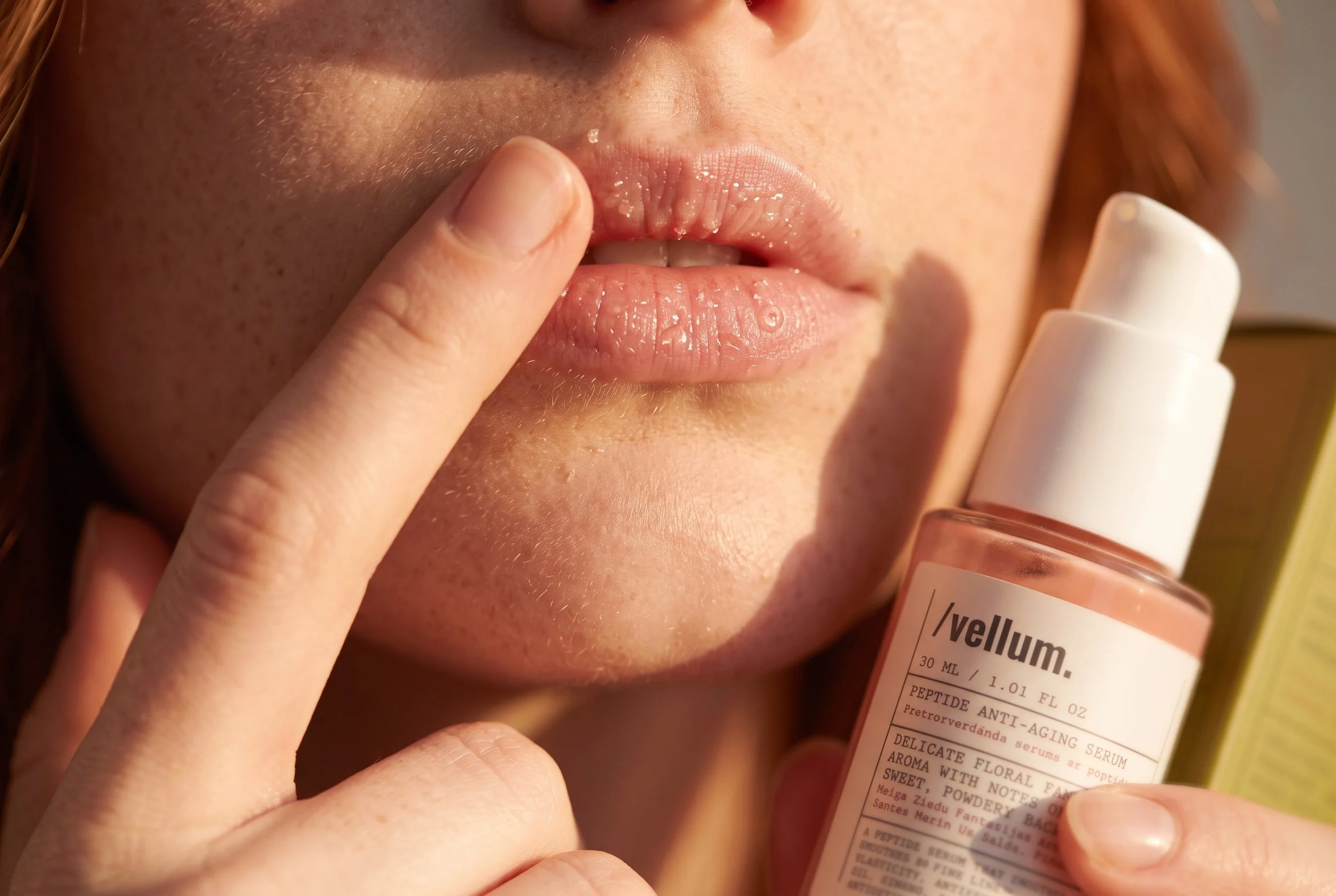
Hydration or exfoliation? Understanding sodium PCA’s role in skincare.
Who Might Appreciate It?
Sodium PCA can be useful in formulas designed for a range of skin types, particularly when the goal is lightweight hydration. It has a generally well-tolerated profile, but the finished formula matters: fragrance, preservatives, and other ingredients can affect how an individual product feels on your skin. No single ingredient guarantees that a product will suit everyone.*
How to Include It in Your Routine
You do not need a dedicated sodium PCA step. It often appears alongside other moisturizing ingredients in products you may already use. Look for “Sodium PCA” on the ingredient list of a serum, gel, lotion, or cream.*
If you choose a lightweight hydrating serum, following it with a moisturizer can pair its water-binding benefits with ingredients that help reduce moisture loss. For reactive skin, patch-test a new product before introducing it more broadly.*
The Takeaway
Sodium PCA is a reminder that effective skincare does not always need to feel active or dramatic. Its value lies in a straightforward function: helping the skin’s surface hold water. In a thoughtfully formulated product, that quiet contribution supports hydrated, comfortable-feeling skin.