An ingredient list is a useful place to begin. It tells you what is in a formula, but not everything about how that formula will feel, perform, or fit into your routine.
Reading it well is less about memorizing unfamiliar names and more about understanding their purpose. A little context makes the label more useful—and the surrounding noise easier to leave behind.
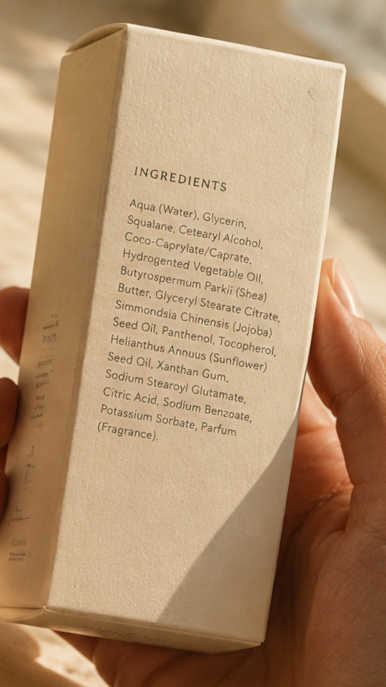
A closer look at the label is a quieter way to get to know your skincare.
Start with the order
Cosmetic ingredient lists generally begin with the ingredients present in the greatest amounts. This principle applies in both the United States and the European Union, where our manufacturing partner produces its formulas.
There are exceptions. U.S. rules allow ingredients present at 1% or less to follow those above 1% in any order. EU rules provide similar flexibility for ingredients below 1%. Color additives may also appear after the other ingredients, subject to the applicable rules.
The list offers a sense of the formula’s composition—not an exact recipe. Position is a clue. It needs context.
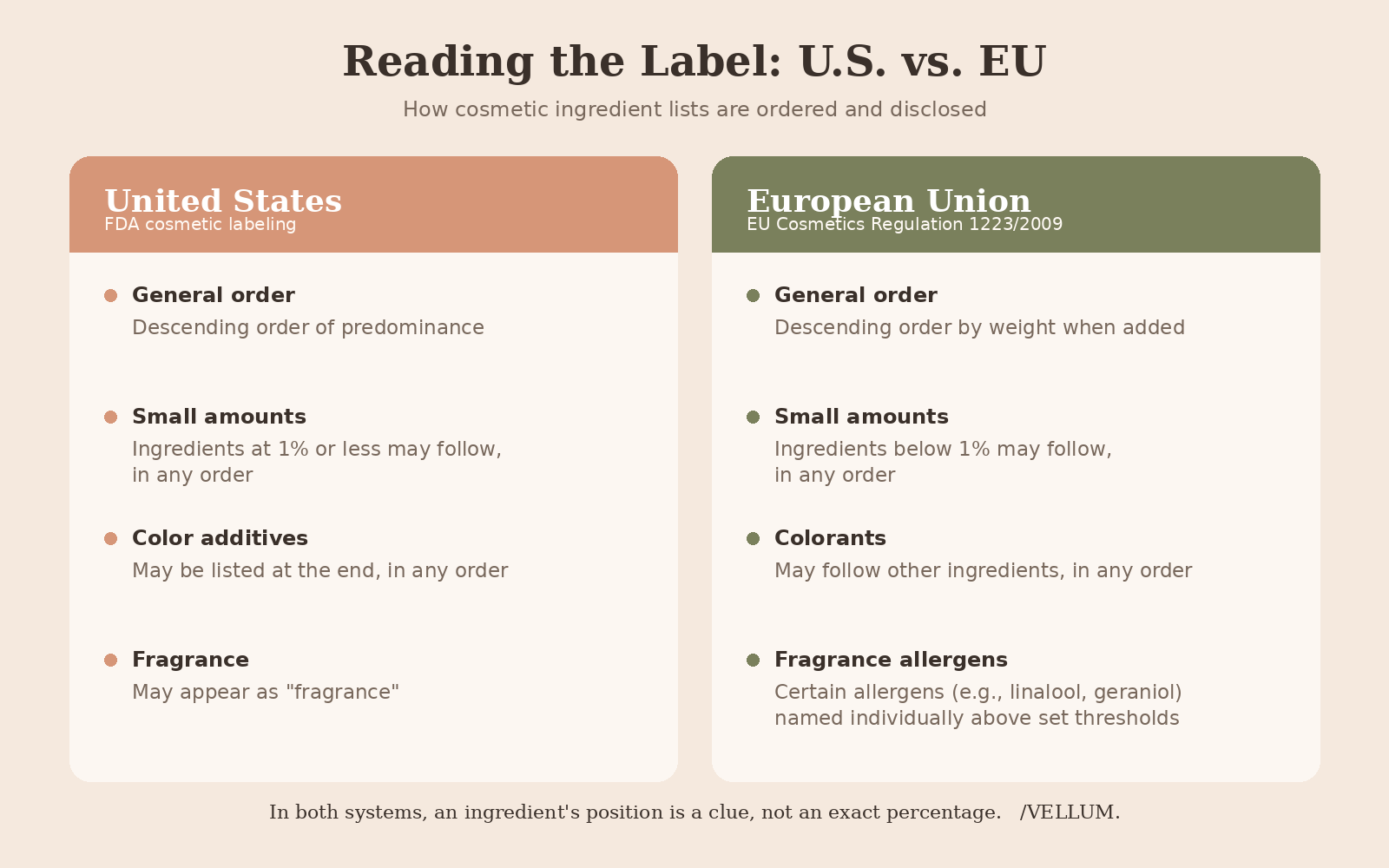
Two labeling systems, one useful starting point: read the ingredient list with context, not assumptions.
Consider the base, not just the headline ingredient
Our Peptide Anti-Aging Serum begins with aloe leaf juice, glycerin, jojoba seed oil, and water. These ingredients form part of the base—the foundation that helps shape the serum’s texture, application, and moisturizing feel.
Further down the list, you will find ingredients such as hexapeptide-11 and ginkgo biloba leaf extract. Their position does not tell the whole story of their role.
A serum is not simply its featured peptide or botanical extract. It is the complete formulation: the base, the supporting ingredients, and the way they work together.
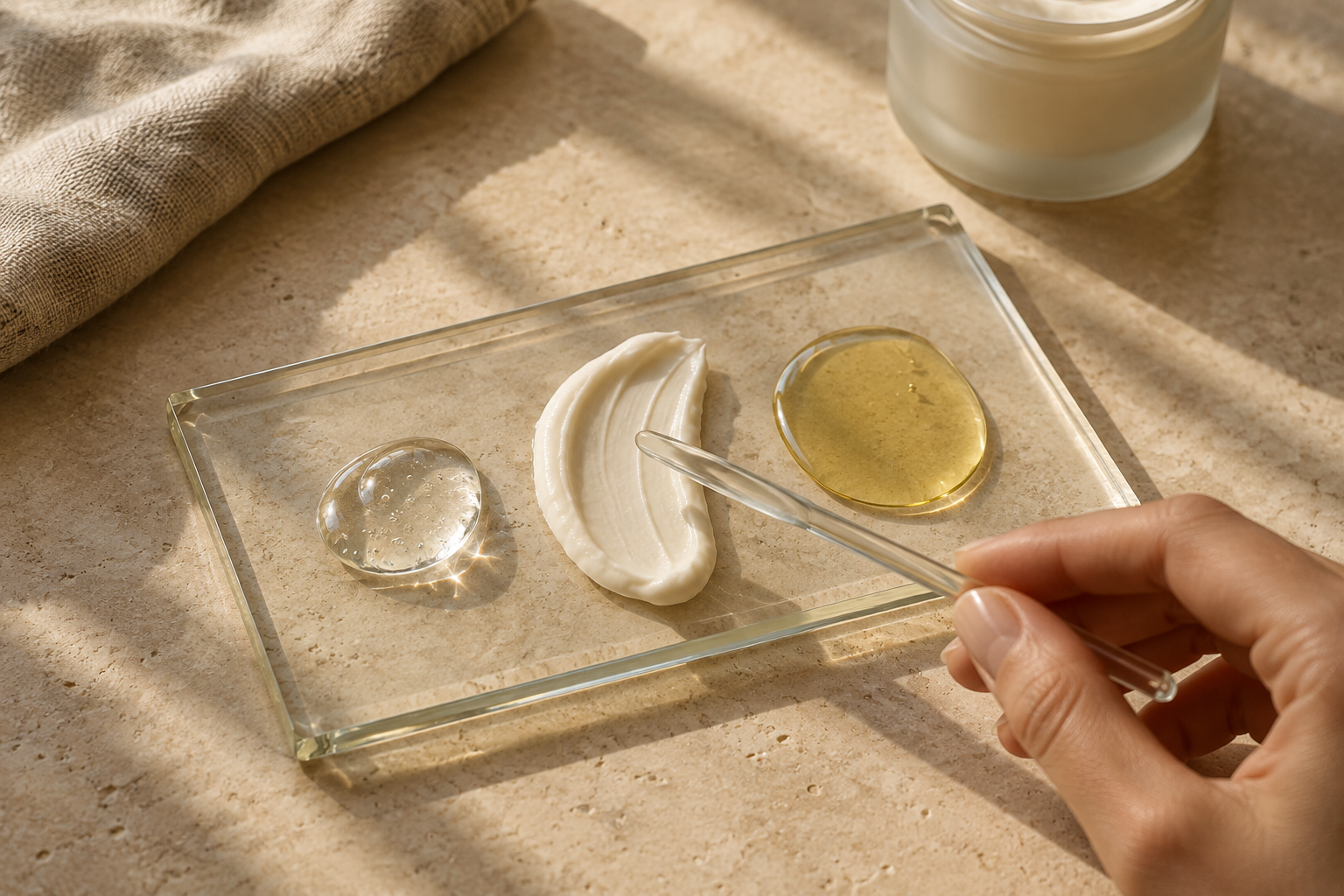
Look beyond the headline ingredient. The base is part of the formula’s story.
Look for purpose
Before searching for a particular ingredient, consider what you want from the product.
For moisture support, it helps to recognize three complementary roles:
Humectants, such as glycerin and hyaluronic acid, help attract and hold water.
Emollients help soften skin and smooth its feel.
Occlusive ingredients help slow moisture loss.
A formula may combine these functions rather than rely on one ingredient to do everything. Understanding those roles is often more useful than looking for the longest list of fashionable additions.
Start with your skin’s needs. Then consider how the formula is designed to meet them.

Look beyond the name. Consider the role each ingredient plays in the formula.
Let unfamiliar names be unfamiliar—not alarming
A technical name is not a warning sign. A familiar botanical name is not a guarantee that an ingredient will suit your skin.
Plant-derived ingredients can cause sensitivity, just as lab-made ingredients can serve useful, well-defined purposes. Fragrance components such as linalool and geraniol may appear in botanical ingredients and can be relevant to people with fragrance sensitivities.
If you know an ingredient causes you discomfort, look for it in the complete list. Introduce new products thoughtfully and patch-test before wider use.
The aim is not to divide ingredients into “good” and “bad.” It is to understand what works for you.
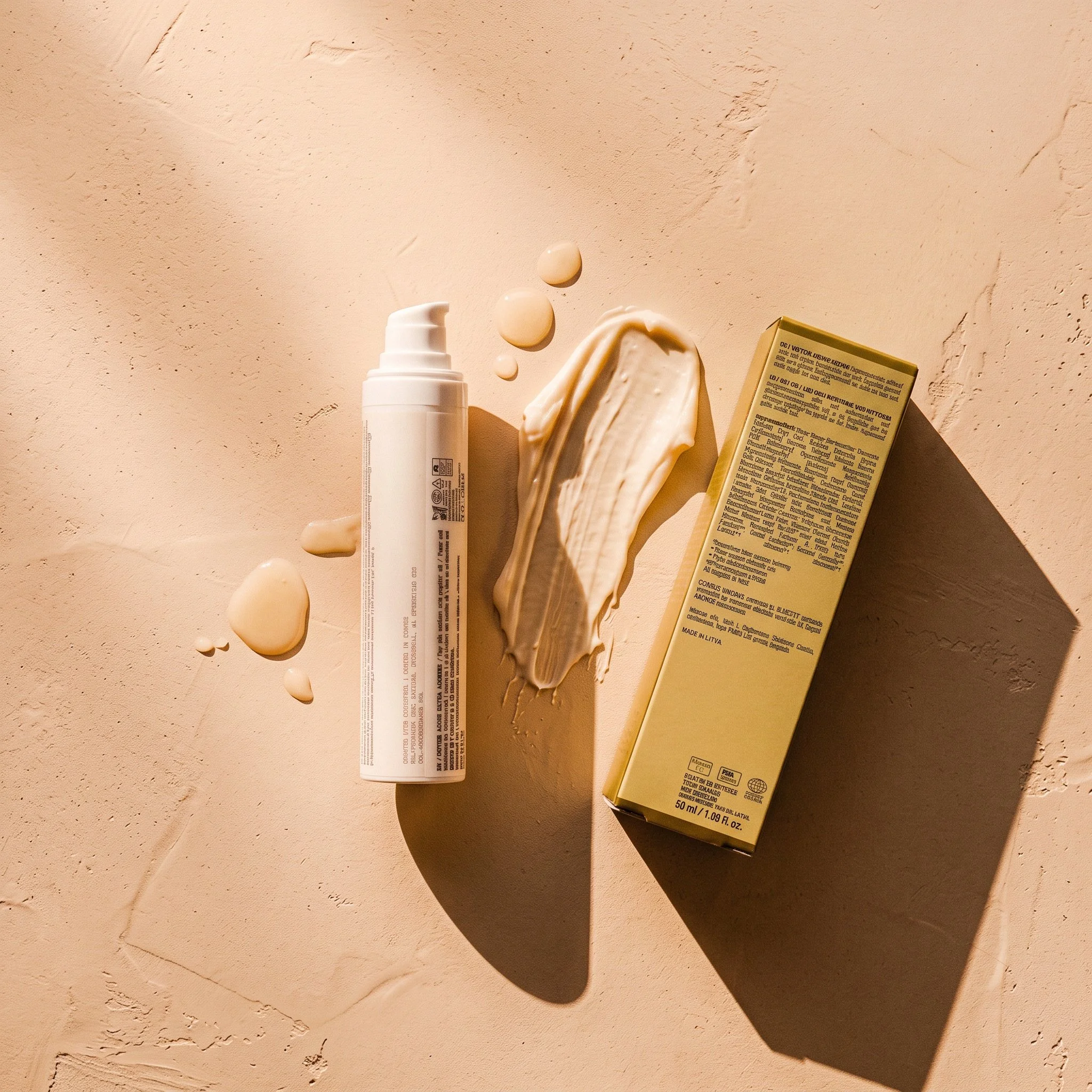
An unfamiliar name is just information. Read it with curiosity, not fear.
Give claims the same attention as ingredients
“Clean.” “Miracle.” “Chemical-free.”
These words may create an impression, but they do not explain a formula.
Look instead for information you can use: a complete ingredient list, clear directions, a defined purpose, and claims specific enough to understand.
Manufacturing standards and certifications offer another kind of context. They should be considered alongside the formula—not treated as a substitute for understanding it. Our Standards page explains how /VELLUM. approaches that distinction.

Caption: Beyond the front-of-box promise, a closer look at the ingredients, certifications, and details behind the formula.
Leave room for your own experience
An ingredient list cannot tell you whether you will enjoy a texture, prefer a different finish, or find a product easy to use consistently.
Those details matter, too.
At /VELLUM., we believe ingredient education should make skincare easier to understand—not give you more to worry about.
The takeaway: read the label for context, consider the complete formula, and let your experience inform what belongs in your routine.
Good skin, less noise.
Make Room for something lovely.